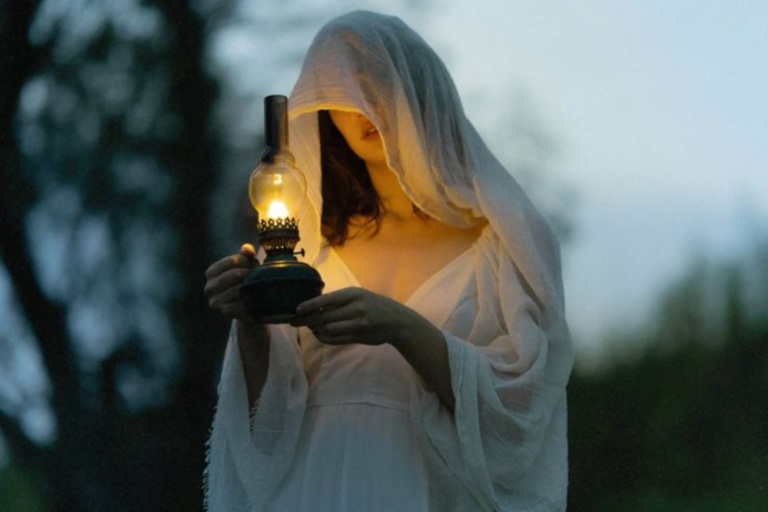
Every town has a place people don’t talk about after dark. The kind of house that sits just outside the last streetlight’s reach, too quiet, too still, with curtains that never seem to move. On the edge of our town, that place is the house on Wintermere Lane.
No one remembers who owns it anymore, and no one wants to. The mail stopped decades ago, the gate rusted shut, and yet sometimes—usually when the air is heavy and the moon looks thin as a fingernail—someone swears they’ve seen light through the windows, a faint golden flicker like someone walking room to room with a candle.
Some stories say the family who built it disappeared overnight. Others say they never left. Every October, when the wind picks up and the leaves begin to turn, the whispers return: music echoing through the woods, a woman’s voice calling from the porch, clocks stopping all at once. It’s a story people tell to scare each other, until the night they hear it for themselves.
And if you ever do, if you ever find yourself on Wintermere Lane and feel the ground hum under your feet—don’t linger. The house is listening.
THE STORY
The house on Wintermere Lane was never officially condemned, though it should have been. It sits at the end of a narrow gravel road, swallowed by overgrown pines and creeping ivy, its upper windows blind with dust. From a distance, it looks almost peaceful—a relic half-forgotten by time—but anyone who’s ever stood at its gate knows that something in the air shifts there. The silence feels heavy, like the house is holding its breath.
It was built in 1894 by the Harrow family, who came from the city to escape a scandal no one could quite name. Mr. Harrow was a shipping magnate; his wife, Elinor, a pianist known for her peculiar compositions—music with no melody, just echoing fragments that never resolved. They had two children, a boy and a girl, and a nursemaid named Clara who was seen crying in town two days before the family vanished. She told the shopkeeper that the children had begun talking to “someone upstairs,” and that Mrs. Harrow had burned her own music sheets, saying she’d “heard the house repeat them back.” No one saw Clara again after that.
The morning of February 2nd, 1902, the milkman found the front door wide open. The clocks inside had all stopped at 3:17 a.m., the same minute the frost on the windows seemed to have frozen in thick concentric spirals—like the whorls of a fingerprint. The fireplace was burning, though the logs were untouched, and in the dining room, all four places at the table had been set for breakfast. A pot of tea still steamed. No trace of the Harrows was ever found.
Over the years, the stories changed shape. Teenagers dared each other to sneak inside, and a few did, returning pale and wordless. One described hearing footsteps pacing above him when he knew the upper floors had collapsed years before. Another claimed the mirrors still reflected the house as it used to be—polished floors, chandeliers, a woman in a long white dress seated at the piano with her back turned.
The strangest story came from a surveyor in the 1970s. He spent three days mapping the surrounding land for a proposed housing project, sleeping in a trailer near the gate. On the third night, he said he woke to the sound of faint piano music drifting through the woods. When he stepped outside, the lights in the mansion’s windows flickered on, one by one, in perfect rhythm with the notes. He walked halfway up the path before the music stopped, all at once. Then, as he turned back, he heard a woman’s voice from the darkened porch: “You’re early.”
After that, the land was abandoned again. Trees grew thick around the property, and the path disappeared beneath roots and bramble. But some nights, usually when the moon is thin and the air smells of snow, you can still hear the piano—soft, disjointed, the same haunting melody Elinor Harrow wrote before she vanished.
They say if you listen long enough, you’ll hear a second sound: a quiet hum, low and steady, like the house itself breathing in time with the music. And if you stay past that—if you wait for the pause between one note and the next—you might catch what comes after: a whisper so faint it almost sounds like your own name.